
On this page
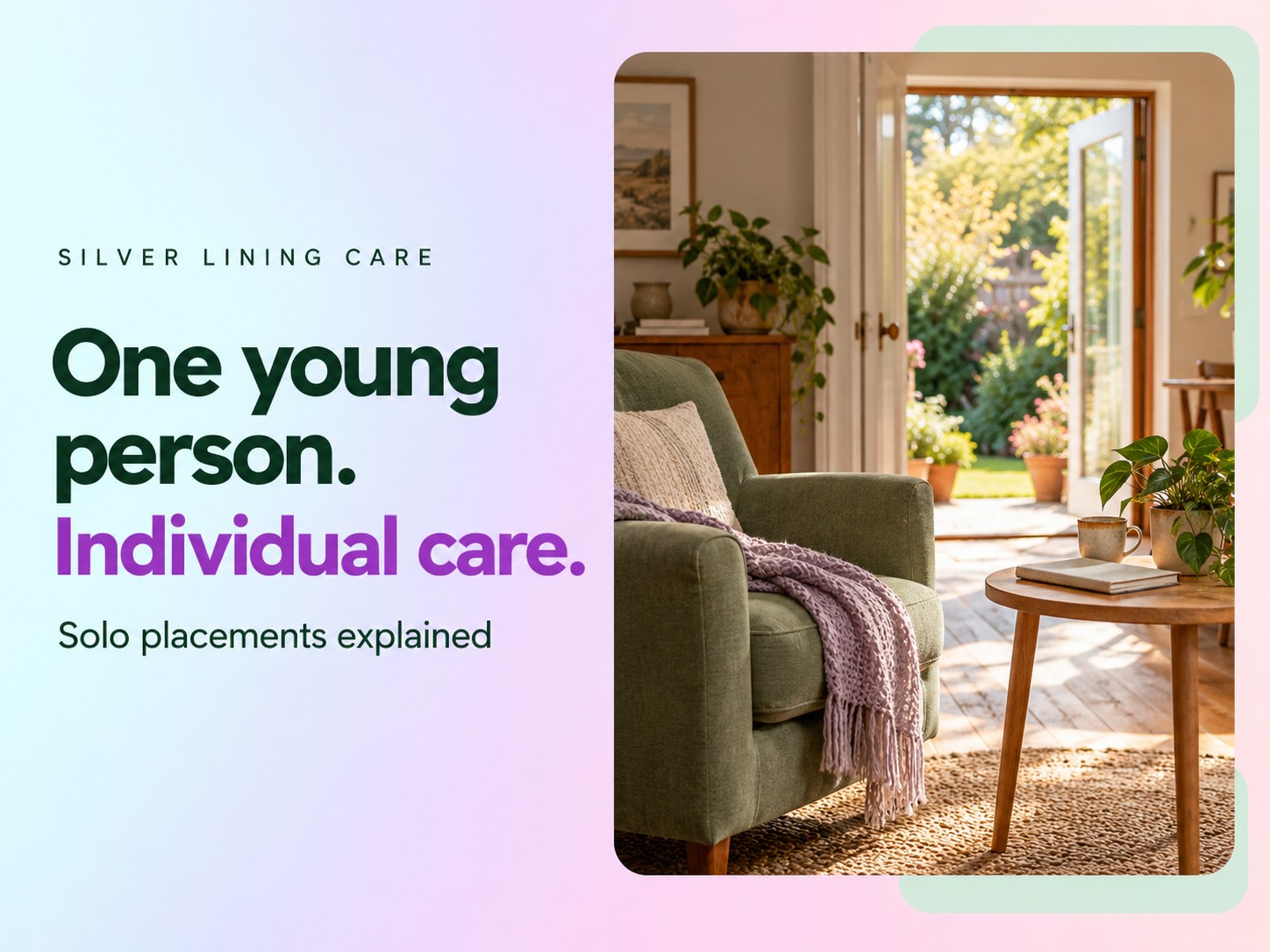
A solo placement is a children’s home that cares for one young person on their own. It’s for young people who can’t live safely with other children because of high-risk or complex needs, and it gives them focused, consistent support in a calm, structured home while they build the stability to move on.
I’m Rhys Herbert, Managing Director of Silver Lining Care. Two of our three homes, Ty-Heddfan in Gwaun-Cae-Gurwen and Ty-Seren in Ystradgynlais, are solo provision homes. This guide explains what that means, who it’s for and how it works.
What is solo provision?
Most children’s homes care for a small group of young people who share the home. Solo provision is different: the home, and the team who work there, are there for one young person.
That doesn’t make it a lesser home. Ty-Heddfan, for example, is a one-bedroom home designed for young people who benefit from an individual placement. It supports focused, relationship-based work and structured routines, in an environment that can adapt as the young person’s needs change.
Who is a solo placement for?
Solo provision is for young people for whom shared living isn’t appropriate, at least for now. That might be because of:
- risks to or from other young people;
- needs so complex that the young person benefits from a very calm, low-pressure home;
- a history of placements breaking down in group settings;
- a need for very individual routines and support.
The decision is made with the young person’s social worker and placing authority as part of careful matching. A solo placement isn’t a label for the young person: it’s the setting that gives them the best chance to settle right now.
How does a solo placement work day to day?
Day to day, a solo home runs on the same things as any good home: predictable routines, consistent adults and warm, relationship-based care. What’s different is how closely everything can be tailored to one young person.
- Tailored planning. The solo model allows a calm setting and tailored planning around known risks, escalation patterns and protective factors.
- Structured, adaptable routines. Routines can be built entirely around the young person’s education, appointments, interests and needs, and adjusted as they change.
- Focused therapeutic support. Staff can give the young person their full attention, which is exactly what’s needed early in the Trauma Recovery Model, where structure, routine and trusting relationships come first.
- Consistent staff. A small, stable team gets to know the young person well, and responds in the same way across shifts.
Ty-Seren and Ty-Heddfan
Ty-Seren in Ystradgynlais offers a highly structured environment and dedicated support when shared living isn’t appropriate. Ty-Heddfan in Gwaun-Cae-Gurwen supports young people unable to live with peers because of high-risk or complex needs. See our homes.
Isn’t a solo placement isolating?
It’s a fair question, and a good provider should be able to answer it. Living without other children in the home doesn’t mean living without connection. A good solo placement keeps a young person’s world as full as is safely possible:
- education, whether at school or in another setting, as set out in their plan;
- family time and contact, as agreed in their care plan;
- activities, hobbies and time out in the community;
- relationships with the adults around them, who are there for them alone.
The aim is for the young person to build the skills and stability to share their life with others again, at a pace that works for them.
Can a solo placement lead to a less intensive placement?
Yes, and for many young people that’s the goal. A period of focused, stable care can help a young person settle, build trust and learn to manage their feelings in ways that make shared living possible later.
Across our homes, 60% of young people leaving us move on to less intensive placements in a planned, positive way. Planned endings matter: moves that happen in an emergency can undo progress, while a well-prepared move lets a young person take what they’ve learned with them.
How do we support the teams in our solo homes?
Caring for one young person with complex needs asks a lot of a team. Our Behaviour Management Team is available to staff at any time for coaching and advice, including planning for known behaviours or risk escalations. After any significant incident, a member of the team attends in person within 24 hours, or as soon as the staff involved are next on shift, to lead a structured debrief. Staff are trained by our own training company, SLC Training, in safeguarding, de-escalation and BTEC Level 2 Physical Intervention.
Frequently asked questions about solo placements
What is the difference between a solo placement and a group home?
A group home cares for several young people who share the home. A solo placement cares for one young person on their own, with a team dedicated to them.
Are solo placements regulated in the same way?
Yes. In Wales, they’re registered and inspected by Care Inspectorate Wales, like any other children’s home.
Is a solo placement permanent?
It doesn’t have to be. For many young people, it’s a stage that helps them move on to a less intensive placement when they’re ready.
Talk to us about a placement
If you’re looking for solo provision in South Wales, get in touch or read more about Ty-Heddfan and Ty-Seren.