
On this page
For most people, Bonfire Night means sparklers, hot chocolate and a sky full of colour. For a child who has lived through trauma, the same night can mean sudden bangs, flashes and smoke that their body reads as danger. With some planning, it can still be a night they enjoy, or at least one they get through feeling safe.
I’m Rhys Herbert, Managing Director of Silver Lining Care. Every year, the weeks around 5 November can ask a lot of children who’ve experienced trauma, and of the adults who care for them. This guide explains why fireworks can be so hard for children who’ve experienced trauma, and shares practical, trauma-informed ways to plan for the night, whether you work in residential care, you’re a foster carer, or you simply want to help a child who finds this time of year difficult.
Why fireworks can be frightening for children who’ve experienced trauma
When a child has grown up with fear, their brain and body learn to stay on alert. Loud, sudden and unpredictable noises are exactly what a body on alert is built to react to. A firework going off outside the window can trigger the same fight, flight or freeze response as a real threat, before the child has had a chance to think.
For some children, the sounds and smells of Bonfire Night also echo past experiences: shouting, doors slamming, violence at home, or police and emergency services arriving at night. They may not be able to explain the connection. They just feel unsafe.
Other children find fireworks overwhelming for sensory reasons. Some young people in care are autistic, have ADHD or have sensory processing differences, and the mix of noise, bright flashes, smoke, darkness and crowds can be too much, even when there’s no memory attached.
It isn’t just one night, either. In England and Wales, registered sellers can sell fireworks to the public from 15 October to 10 November, so the bangs can start weeks before 5 November and carry on for days afterwards, often at unpredictable times. That uncertainty is a big part of what makes this time of year hard.
What distress can look like
Children don’t always show fear in the way adults expect. Around Bonfire Night, you might notice:
- trouble getting to sleep, nightmares or waking in the night
- being jumpy, irritable or quick to anger
- clinginess, or not wanting to be left alone
- withdrawing, hiding or going quiet
- restlessness and difficulty concentrating, including at school
- more risk-taking, or wanting to be outside and close to the noise
It helps to think of behaviour as communication. A young person who is shouting or slamming doors on 5 November may well be saying they don’t feel safe, and what usually helps most is an adult who stays calm and close, rather than a consequence. Trauma-informed approaches such as the Trauma Recovery Model start from the same place: safety first.
Planning ahead: the weeks before Bonfire Night
Most of the work happens before the first firework goes off. Every young person is different, so planning works best when it starts from what the adults around them already know, from their plan and risk assessments, and, just as importantly, from asking them.
Talk about it early
Explain, in a way that suits the child’s age and understanding, what Bonfire Night is, when fireworks are likely and what they’ll sound like. For younger children, or those who like visual information, a simple calendar or timeline can help. Knowing that a loud noise is coming, and why, makes it far less frightening than being taken by surprise.
Give them a choice
Some young people love fireworks and want to go to a display. Others would rather stay in with a film and a takeaway, as far from the noise as possible. Many are somewhere in between. Offering real choices, and respecting the answer, gives a child some control over a night that can feel out of their control.
Create a calm space
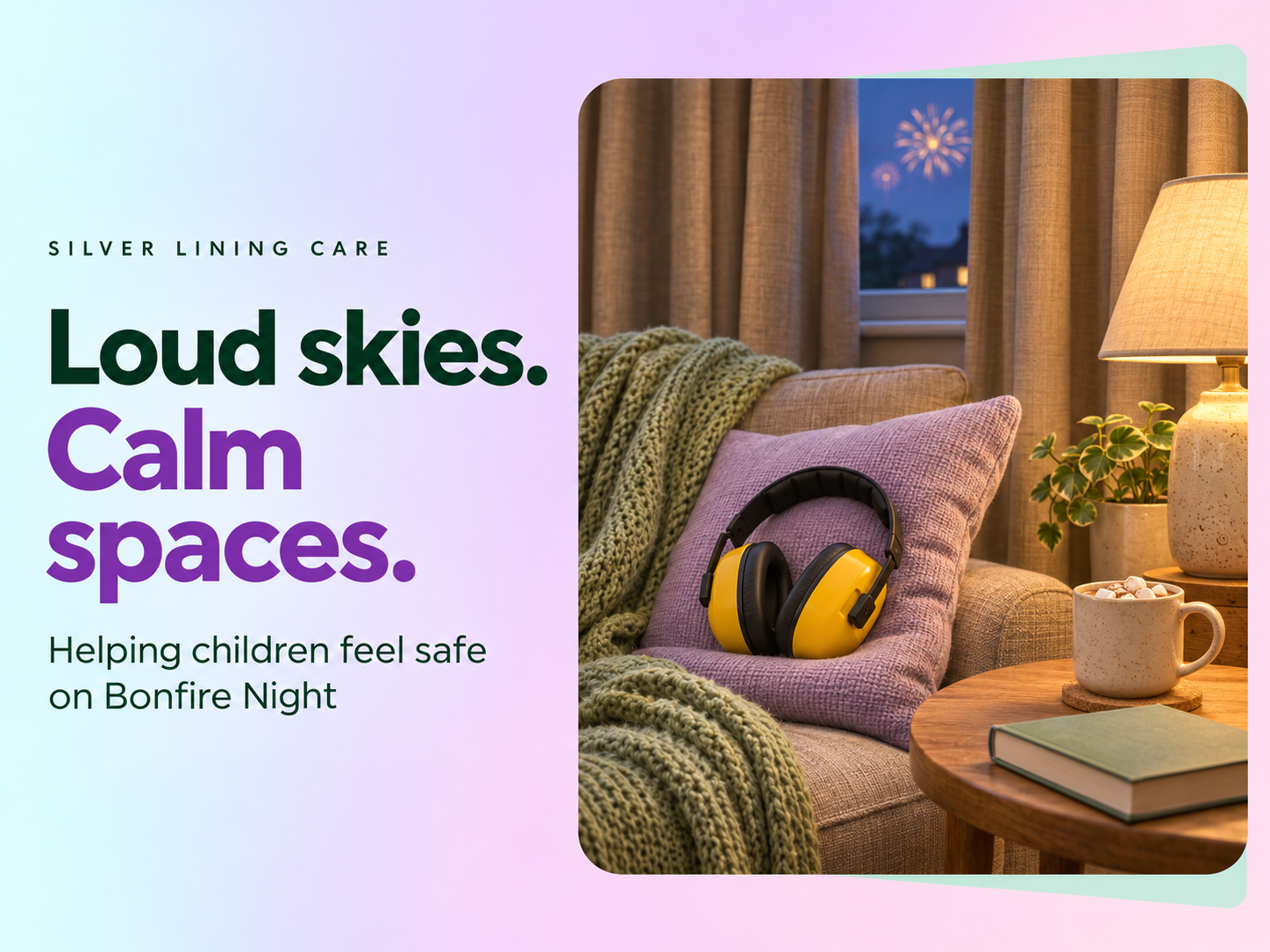
Think about where the child will feel safest. That might be their bedroom or a quiet living room, with curtains or blinds closed to block the flashes, music or white noise to soften the bangs, ear defenders or headphones, a weighted blanket, and favourite snacks within reach. Let the young person help set it up, so it feels like theirs.
Plan the team
A familiar face matters more than usual on a hard night. Where possible, make sure the young person is with adults they know and trust, and that everyone involved knows the plan, so they all respond in the same way. It’s a good example of why staff stability matters so much in children’s homes.
Share the plan
If a young person is likely to struggle, it can help to let their social worker know, and their school too, if poor sleep might affect the days around Bonfire Night.
On the night: helping a child feel safe
Keep the evening predictable
Stick to the usual routine as much as possible: tea at the normal time, familiar activities, the usual bedtime routine. Predictability is calming. If the plan is a film night, start it before the fireworks are likely to begin.
Stay close and name what’s happening
The most powerful thing an adult can offer is their own calm. Sit nearby, keep your voice low and steady, and put words to what’s happening: “That was a firework. It’s really loud, and you’re safe here with me.” This is co-regulation: the child borrows your calm until they can find their own. PACE (playfulness, acceptance, curiosity and empathy) is a helpful way to stay connected in moments like this: accept the feeling rather than trying to talk the child out of it.
Use distraction and the senses
Games, baking, crafts, music or a favourite series: anything absorbing that fills the senses can help. So can sensory tools the child already finds soothing, such as fidget toys, a warm drink, a bath or a blanket.
If they’re going to a display
Organised displays are usually safer and more predictable than fireworks in back gardens, but they’re also busy and loud. If a young person wants to go:
- agree a signal they can use if they want to leave, and leave straight away if they use it
- stand towards the back or the edge, away from the crowd
- bring ear defenders, and think about arriving late or leaving before the finale
- talk through what will happen beforehand, including the journey home
Sparklers and safety
If a young person is using sparklers, follow your local fire service’s safety advice, such as wearing gloves, holding them at arm’s length and putting them in a bucket of water when they’ve finished. Remember that sparklers are fireworks too, and the law says you must not set off or throw fireworks, including sparklers, in the street or other public places.
A quick Bonfire Night checklist
Talk about it early. Offer real choices. Prepare a calm space with curtains, music, ear defenders and comfort items. Keep familiar adults around. Stick to the routine. Stay close, stay calm and name what’s happening. Agree an exit signal for displays. Expect a slow morning afterwards.
Older young people, fireworks and the law
For some teenagers, the challenge is the opposite: they want to be out where the action is. Bonfire Night can bring peer pressure and risk-taking, and some young people may be drawn towards older peers who don’t have their best interests at heart, which is why it’s important to stay alert to the signs of exploitation. Clear, calm conversations beforehand help, along with an agreed plan for where they’ll be and who with.
It also helps to be straight with young people about the law in England and Wales:
- You have to be 18 or over to buy adult fireworks.
- It’s an offence for anyone under 18 to have fireworks in a public place.
- You must not set off or throw fireworks, including sparklers, in the street or other public places.
- Fireworks can’t be set off between 11pm and 7am, except on Bonfire Night, when the cut-off is midnight, and on New Year’s Eve, Diwali and Chinese New Year, when it’s 1am.
Breaking these rules can lead to an on-the-spot fine or more serious penalties. For a young person who is working hard to build a positive future, it isn’t worth the risk, and most respond well when the adults around them explain why, rather than simply saying no.
The morning after, and the nights that follow
A late, disrupted night can leave a child tired and fragile the next day. Build in a gentle start, keep demands low, and let school know if they’ve had a hard night.
When things are calm, talk about how it went. Notice and praise what the young person managed: “You found that really hard, and you stayed with us and got through it.” Then record what helped, and what didn’t, in their plan. That learning matters, because the weekends after 5 November are often noisy too, and fireworks come round again at New Year.
Keep an eye out for delayed reactions. Some children seem fine on the night and struggle a few days later, once the adrenaline has gone.
Looking after the adults too
Supporting a frightened or dysregulated child through a long, noisy evening is tiring, and some adults find fireworks hard themselves. Regular supervision, reflective practice and the chance to talk through a difficult shift afterwards all help adults stay regulated themselves, and adults who feel supported are far better able to keep offering children the calm they need.
Frequently asked questions about Bonfire Night and trauma
Why does a child seem more unsettled in late October and November?
Fireworks can be sold to the public from 15 October to 10 November, so many children hear unpredictable bangs for weeks, not just on 5 November. Darker evenings and changes to routine can add to it.
Should children in care go to firework displays?
It depends entirely on the child. Some love them and do well with planning, such as ear defenders, an exit signal and a spot away from the crowd. Others are better off staying in. The right answer is the one that works for that young person, ideally one they’ve chosen.
What helps most with the noise?
A combination usually works best: closing curtains, playing music or white noise, ear defenders or headphones and, above all, a calm adult staying close.
Is it bad behaviour if a child reacts badly to fireworks?
Usually not. Anger, hiding or refusing to settle are often signs of fear. Responding with calm and reassurance helps a child feel safe again far more quickly than a sanction would.
Care that thinks ahead
Thinking ahead for children, on Bonfire Night and every other day of the year, is at the heart of good residential care. If you’d like to work in children’s residential care, see our current vacancies.