
On this page
Moving into a children’s home is one of the biggest changes a young person can go through. A good admission is carefully planned, puts the young person at the centre, and makes sure the home is right for them, and that they’ll be safe and settled alongside anyone already living there.
I’m Rhys Herbert, Managing Director of Silver Lining Care. This guide explains, step by step, how admissions work in our homes, for young people and families, social workers and placing authorities. It follows our Admissions, Placement and Commencement of Service policy, which sets out how we meet the regulations for children’s homes in Wales.
The rules for admissions in Wales
Children’s homes in Wales are registered and inspected by Care Inspectorate Wales (our guide to how children’s homes are regulated explains more). The Regulated Services (Service Providers and Responsible Individuals) (Wales) Regulations 2017 set out what has to happen when a service starts caring for someone. In short:
- Before agreeing to a placement, the provider has to decide whether the service is suitable to meet the young person’s needs.
- A personal plan must be in place before care starts, setting out how the young person will be supported day to day, how they’ll work towards their personal outcomes and how risks will be managed. If a young person urgently needs care and there wasn’t time, it must be prepared within 24 hours.
- A provider assessment must be carried out within 7 days of care starting.
- The personal plan must be reviewed whenever it needs to be, and at least every three months. For looked-after children, these reviews line up with the local authority’s own reviews.
- The young person, their placing authority and any representative must be involved throughout.
Our policy builds on these requirements with a structured process and timescales of our own.
Step 1: Referral and gathering information
An admission usually begins with a referral. We gather initial information from the young person, their social worker, their carer or their representative, to build as full a picture as possible of who they are, what they need and what they want.
The young person’s consent matters. We seek it from the young person themselves, and where their capacity to consent is uncertain, we need the right documentation from the local authority. Everything we receive is logged and stored securely in our digital case management system.
Step 2: Is this the right home? Assessment and matching
The Home Manager leads the assessment, with oversight from senior management. The care needs assessment looks at the young person’s physical and mental health, communication needs, risks, preferences, wishes and goals. It focuses on their abilities and future development as well as their needs, and balances their privacy with what we need to know to plan well.
Just as important is the impact and compatibility assessment. Using a structured matching document and impact scoring, we look at how a new admission might affect the young people already living in a home, and how they might affect the new young person. A placement that looks right on paper can still be wrong if the mix of young people isn’t safe or settled.
This is where the type of home matters. Ty-Alban in Coelbren is a three-bedroom home for up to three young people. Ty-Heddfan in Gwaun-Cae-Gurwen and Ty-Seren in Ystradgynlais are solo provision homes, for young people who can’t live safely with other children, at least for now. Our guide to solo placements explains how they work.
Matching works both ways. If a home isn’t the right fit, it’s better for everyone, and above all for the young person, to recognise that early than to risk a placement breaking down.
Step 3: Preparing the team
Before a young person arrives, the team who will care for them need to understand them. Our pre-admission training takes place over approximately three days and includes:
- an admission briefing on the young person’s profile
- a review of their previous transitions, so we can learn from what has and hasn’t worked before
- personalised training on their identified support needs, such as trauma, de-escalation or particular health needs
The team then go through the young person’s placement plan, risk assessment and behaviour support strategies together. Keyworkers are assigned, and staff plan how introductions and those first conversations will go. More broadly, our staff’s specialist training comes from our own training company, SLC Training.
Step 4: Planning the move
Every admission has an Admissions Pack: a structured record that brings everything together and informs the young person’s personal plan, placement strategy and review schedule. It includes:
- an admission form covering the young person’s details, status and goals
- a location risk assessment
- a document checklist and a log of professional meetings
- the provider assessment the regulations require
- matching and impact assessments
- a transition plan
- an interview with the young person about their goals and wishes
- inventory and toiletry checklists
The transition plan sets out how the move will happen, and the young person’s keyworker is introduced either during the transition or on their first day. In general, the more a young person knows about where they’re going and who they’ll meet, the less daunting a move feels. The young person’s own interview, goals and wishes sit at the heart of it: it’s their move, and their voice should shape it.
Step 5: Moving-in day
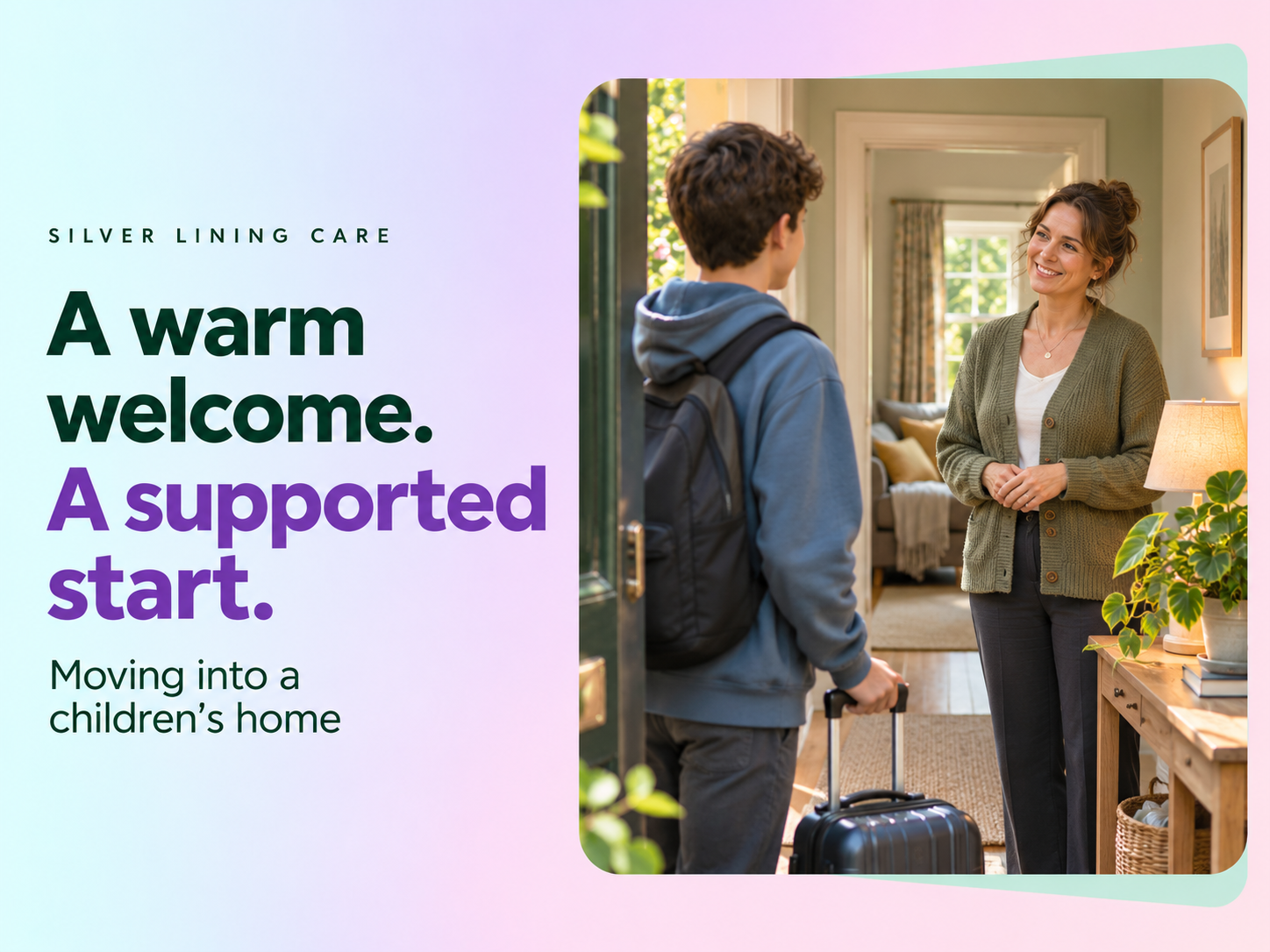
On the day itself, the young person is welcomed and supported by familiar staff. We make sure the essentials are ready, such as bedding, toiletries and clothing, and we help them make their room their own, whether that’s putting up posters, choosing colours or finding a place for their belongings.
Staff help them unpack and show them around, so they get to know the layout of the home and its routines. We ask about their expectations and preferences, talk through the house rules, and introduce them to the team and to any other young people living there. Their keyworker goes through the young person’s handbook with them in detail, and we encourage them to ask questions and to say how they’re feeling.
Small things can make a big difference on a first day: knowing where things are, knowing what happens at teatime, and knowing who’ll be there when they wake up in the morning.
The first week and beyond
The first few days are about settling in and getting to know each other. Within the first 7 days:
- the Admissions Pack is completed
- the provider assessment is carried out, as the regulations require
- an initial review checks that the care plan reflects the young person’s current needs and goals
After that, reviews happen when they’re needed, for example when a young person’s needs change significantly or there are concerns about the placement, and at agreed intervals, in line with the requirement to review personal plans at least every three months. We can call a review ourselves if we think one is needed, and any lasting change in a young person’s needs leads to revised support.
The young person’s voice
Young people are encouraged to give feedback throughout and are offered access to independent advocacy, so their voice is heard and their rights are respected. The interview and goal-setting tools from the Admissions Pack are the starting point for those conversations.
Keyworkers
A keyworker builds a trusting relationship with the young person, supports their goal-setting and keeps track of their progress. Young people can ask for a different keyworker at any time.
Learning from every admission
After each admission, the team debriefs on how the transition went, reviews whether the training was effective, collects feedback from the young person and identifies any extra support or training needed. Our Responsible Individual monitors the process, and we review it every quarter so we keep improving.
What happens in an emergency admission
Not every move can be planned. Sometimes a young person needs somewhere safe to live urgently. Emergency admissions follow our separate Emergency Admission and Review Policy, with tighter timescales:
- a basic telephone assessment is recorded to cover the first 72 hours
- a full assessment is completed within 3 working days
- social services provide a formal assessment within 2 working days
- the Admissions Pack is completed within 72 hours, rather than 7 days
- under the regulations, if there wasn’t time to prepare a personal plan before the young person arrived, it must be in place within 24 hours
An emergency move can be frightening for a young person, so the same principles apply: calm adults, a clear welcome, and getting to know them as quickly and carefully as we can.
For social workers: what helps a placement start well
In general, the fuller the picture a home has at referral, the better it can match and prepare. Recent assessments, the care and support plan, risk information, health and education details, what has helped in previous placements and, above all, the young person’s own views all help to get the first days right.
Frequently asked questions about moving into a children’s home
How long does it take to move into a children’s home?
It depends on the young person, and on whether the move is planned or an emergency. A planned admission includes assessment, matching and around three days of pre-admission training for the team. In an emergency, a young person can move in quickly, with assessments completed within days.
Can a young person visit before they move in?
It depends on the circumstances. In general, the more a young person knows about a new home before they arrive, the easier the move tends to be, so it’s worth discussing when the transition is being planned. Every transition is planned around the individual young person.
Who decides whether a placement goes ahead?
The Home Manager leads the assessment and matching, supported by senior management and our Responsible Individual, working closely with the young person’s social worker and placing authority. The young person’s views are central throughout.
Can a young person bring their own things?
Yes. We encourage young people to personalise their rooms with their own belongings, posters and choice of colours, so their room feels like theirs.
What if a young person doesn’t get on with their keyworker?
They can ask for a change at any time.
Making a referral
If you’re a social worker or placing authority looking for a placement in South Wales, get in touch or read more about our homes.